Archive for the ‘Uncategorized’ Category

High heels break my heart.  High heels are always beyond beautiful to me, and all the shoes I see and like tend to have ridiculously high heels.  Iron Fist is my favorite guilty pleasure; they may be a bit Ed Hardy-ish, but MAN are they cute.

I mean…come on.

I am terrible at wearing high heels.  It takes lots of practice; there are hundreds (maybe thousands) of articles out there about how to walk properly in heels.  When I was friends with burlesque dancers, we used to practice walking around our city in high heels, and generally we’d be dead after about two blocks.  I have a vision of wearing heels to my high school graduation and being in tears by the end of the ceremony because the straps had bloodied my feet.

Heels have some nasty side effects, too.  They fucking hurt to wear – don’t let anyone tell you otherwise.  Many women wear

ahhhhhhhAHHHHHHHHHHH

heels so often their Achilles tendon shortens, and it becomes painful to wear flat shoes or go barefoot.   They change your gait, make you walk more slowly and move toe-heel rather than heel-toe.  It’s damaging to your knees, to your back, to your feet.  If you’re not sitting down for at least 5-10 minutes every hour in heels, you run the risk of nerve damage in your feet;  after a night out drinking in heels, my friend was forced to have surgery; the night ended in damage to the balls of her feet and almost necessitated the removal of two toes.

Still, I find myself hesitating every time I go to clean out my shoe collection.  Part of a professional presentation as a woman often includes high heel shoes.  I kid myself into thinking I might wear them out to dinner, or to a wedding (I won’t).  They’re sometimes the only way to fancy up a boring outfit. Plus…they’re so pretty.

While reading Bad Feminist, one of the lines that’s stuck in my mind is about high heels and purses.   To paraphrase author Roxane Gay, they’re pretty, but they were invented to slow women down.  I agree with it, and I hate it.

The high heel shoe has a long and storied history.  It’s been a symbol of societally enforced sexiness for hundreds of years.  After all, an impractical shoe ensures women are physically slower and mentally preoccupied (either with how great they look, finding a great pair of shoes, or with how much pain they’re in).

look at those boys!

I can’t think of many punk or hardcore bands where heels are present (with the fabulous exception of the New York Dolls).  It’s tough to skank around if you can hardly walk; it’s tough to keep your balance when you’re already balancing.  Punk, in my mind, after the 1970s, was mostly about function over fashion, rejecting societal norms and making that rejection a fundamental part of your presentation.  Viv Albertine talks in her autobiography about wearing boots with dresses after she and a friend were chased and assaulted by a gang.  It’s tough to run for your life in heels.

This morning I had a moment of sadness that I was opting for flats, after walking to my car at a snail’s pace in my favorite fancy pair of heels.  But for me, I’m reminding myself today I can walk quickly and function well.  That’s my tradeoff.  And my heel collection, well…maybe that will be a tradeoff soon too.

But not one without regrets.

My sister is amazing.  We’re the only two children in our extended family, and have 8 years between us.  As she gets older and wiser, we’re getting closer and building up our adult relationship.

We are about as different as two siblings can be.  In school, I was an enormous nerd; I wore glasses, had wavy, frizzy hair, was chubby and awkward (not like Zooey Deschanel awkward, like Amy Schumer awkward).

fuck you.

I played in marching band, and was on backstage crew in theater.  NERD.  College gave me punk rock, and I haven’t looked back since.

My sister was nominated for homecoming princess, captain of her soccer team, with naturally straight hair.  She played basketball, volleyball and powderpuff football.  She made t-shirts with her friends and took selfies that looked professional.  She’s also smart as shit and is studying to be an engineer now.

So it took me by surprise when she texted me to let me know she wants to be a punk now.

with this picture. it’s great, isn’t it?

After I recovered from my laughing fit, I started thinking about how one becomes a punk.  If you’re past the age of 15, it becomes more difficult to get into the culture, into the scene.  I still wince thinking about my naiveté calling garbage pop punk and post-hardcore records “punk.”  Oops.

this guy definitely knows how to be cool.

It’s the little things, you know?  Like the time a punker told me I had “all the right bands” on my computer.  I was 18, this was a big deal.  Or the party where my idol put on And Out Come the Wolves and I could sing along with everyone else.  Or a bouncer seeing my Black Flag tattoo and saying something about it.  Poser moments?  Maybe.  But they were a part of my punk evolution.

The best advice I ever got was from a friend of mine who we nicknamed “Scary Eyebrows.”  They were incredible, they stuck straight out like Einstein’s hair.  Anyway, he told me punk was all about doing whatever the fuck you wanted and not caring if anyone liked it.  That’s still the philosophy I try to live by.

So, if you want to be a punk, start with your education.  Read all the books you can about the birth of the musicWatch documentaries.  Talk about them with your friends.  Get comfortable with the politics and divides.

Go to shows.  Like, all the shows you can.  Especially local shows.  Punks support each other and support the local scene.  Try to avoid major label bands if at all possible.  Buy merch and music directly from the bands – that’s how they make their money, not by the cut from iTunes sales.

Listen to punk.  Obvious, but important.  Get familiar with the nuances, the different genres and styles.  Peruse the classics and figure out what you like and don’t like.  Are you a fan of gang vocals and rage?  Maybe hardcore punk is your shit.  Do you enjoy skanking around and bouncing with friends?  Try out some third wave ska.  Are bagpipes and fiddles your cue to party?  Perhaps some Celtic or eastern European  punk bands would tickle your fancy.  Do you hate the establishment?  Start with crust punk and crack rock steady, then work your way into 1990s hardcore.

Keep up on the news.  Read DyingScene.com and Profane Existence.  Skim through Maximum Rockandroll.  Keep informed about your town’s scene.  Read some zines and stuff created by your peers and compatriots.

Do the jobs that fit with your values, that honor DIY ethic, that contribute to the community.  Be nice to people.  Pick people up that fall down.

Drink PBR, or don’t.  Eat hamburgers, or be a vegan.  Dye your hair, or never fuck with showers.  Be yourself.

Most importantly, dress however the fuck you want.  Do not, I repeat, DO NOT go shopping at Hot Topic.  You can’t buy your way into punk.  Do It Yourself is the guiding principle here.  Tear up your own t-shirts, sew your own patches, stud your own vests, paint your own leathers.

I guess that’s where my advice ends.  Any additional advice is more than welcome in the comments!

I was fist pumping wildly while listening to NPR on my drive to work this morning; not a daily occurance.

This, basically.

Twitter has finally stepped up against the hateful misogyny to which it has turned a blind eye since it’s inception.  A press release was issued today.

Any picture or video of an “intimate nature” (this is sexts/naked pictures, for those without patience for euphemisms) that is posted without the consent of the person in the picture is now off-limits.  Here are the action steps:

  1. If you see a picture of you, you submit a complaint to Twitter.
  2. A team confirms it’s you in the picture (they say you “verify it’s you” not sure what that really means)
  3. Picture is blocked from public view
  4. The person who posted it has their account locked
    1. They now have the opportunity to prove you consented to have your naked form plastered around the internet
  5. If no proof of consent is found, the picture is removed permanently, the account is suspended permanently

I was also yelling YES! because this applies not only to boobies pictures, but also personal information (birth certificates, addresses, driver’s licenses etc) posted without your consent.

Is this a perfect solution?  Absolutely not.  But it’s important for a couple reasons.

First, I count this as a victory of feminist activism.  Revenge porn (when someone, usually an ex, posts private, intimate content without consent, generally to punish and shame) and doxxing (when personal information about someone who disagrees with you is posted online, and/or other really, really scary shit is done to intimidate and harass) has been the subject of countless essays, thought pieces, book chapters and online fights.  I’m SO GLAD it’s had an impact!  A company is actually having to change it’s policies.  It doesn’t matter (well, it does, but keep positive) that Twitter was dragging its feet and that this is an imperfect solution.  Now Reddit looks to be following suit.  This is a good step.

Second, it acknowledges these posts as real harassment that has a real effect on the (usually women) people who have their information posted.  On the radio, a domestic violence activist reminded listeners how compromising pictures/information can be used as a form of power and control, intimidation, and emotional abuse.  Maybe those in power positions will think twice before attacking on all fronts.  Maybe it will encourage a bit of self-control.  We can dream, yes?

Third, this is a step toward encouraging respect online.  It’s super easy (and psychologically inevitable) to be an asshole when you’re anonymous.  Now, maybe we can see a bit more accountability, some more understanding that these are actual people, actual women (and men) who have real lives and see real effects from online abuse.  Empathy, anyone?

Okay, no policy or rule or law will ever stop hateful behavior; only speech, time, understanding and empathy can do that.  But it’s a start.

Fist pump!

As a wise band once said, breaking up is hard to do.

When you’re young, breaking up is the end of the world.  Your chest is always tight, your eyes always on the verge of tearing up, and every song you hear is either a repudiation or an anthem of your personal pain.

It doesn’t matter what side of the breakup you’re on, either.  It really sucks to be dumpee, but it also really sucks to be the dumper (and how gross does that term sound?).  Constantly questioning your values and your value as a person is exhausting, producing the kind of existential angst only matched by 00s emo (I’m looking at you, Taking Back Sunday).

these fuckin’ guys right here.

Breaking up is also super important.  It puts everything into sharp relief – what’s really important to you in another person, what valuable contributions a partner brings to the relationship.  I read once most relationships are broken apart by sex, money and childrearing.  I believe this only because those are three of the biggest issues dealing with personal values we can face, and that couples must face.  I doubt it’s actually money or sex or kids that are the problem; it’s our beliefs about how things should be done, how the world functions, and our place dealing with these things, that create relationship turmoil.  Our schema, if you will.

Rougher still for me personally is the uselessness of my old standby for decision making, the pros/cons chart (here’s a great one, if you’re into that sort of thing).  You can list good and bad all day, but a relationship has weighted grades.  One con may outweigh 10 pros, or vice versa.  It makes things very complicated.  I’ve never met anyone who thought the person they loved was all good or all bad, and even when things get shitty (like, really shitty), it’s tough to discard the non-shitty parts.

More recent narratives and articles don’t help (Mr. Right Now, anyone?), although lately it seems more women (and men) in feminist spaces are extolling the virtues of the single life.  In a world still obsessed with finding The One, ticking biological clocks, and stories of the sad, lonely misfits brought low by lack of relational prowess and partners, ending a lackluster or unfulfilling relationship seems like selfishness, like betrayal.  Shouldn’t we be grateful anyone exists to love us at all?  Shouldn’t we just keep trying because nothing and no one will ever be 100% perfect?

(see this quote from the Wedding Planner)

Jerry Seinfeld, the greatest philosopher of our time, compared breaking up to pushing over a vending machine, because it takes a couple tries to get it done.

Here’s to picking candy out of the broken glass.

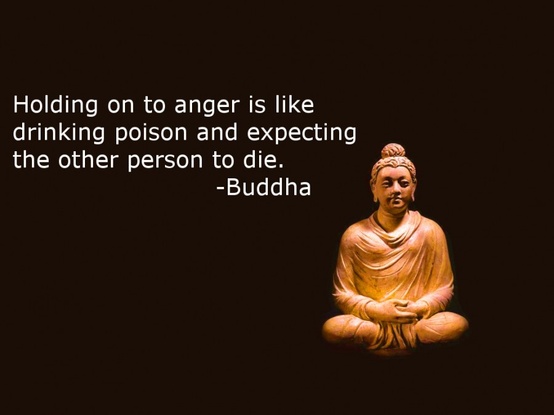
Full disclosure: I have run many an anger management group and it infuses a lot of the classes I teach.

The main concept we try to get to is control of behavior.  You might feel your feelings, but you have to be responsible for your actions and behavior.  Just because you’re pissed doesn’t give you the right to hit someone in the face.  Got the concept?

It’s a new expectation for behavior.  If you were in prison, where letting an insult go can lead to a label and a target on your back, it’s (almost always) seen as necessary to respond to insults with force.  If you’re living in the hood, part of not getting messed with is projecting an image of strength and fearsomeness.  Rightly or wrongly, these are the cultural expectations we see in folks with anger problems.  It’s not because everyone in prison is an asshole – it’s because the situation and culture creates an expectation for behavior that one must follow to remain safe.

Controlling an anger reaction is difficult not only because it runs opposite to lots of cultural and situational training, but also because it’s tough to let wrong people get away with being wrong.  It’s essentially a game of self-control, but most of the time it’s frustrating and unrewarding; it’s much more satisfying to actually act on your emotions (consequences be damned) than to control them.  Especially for men, who have so much identity tied up in being macho and tough and ready to fight, it’s really hard to expect them to walk away from someone who is in the wrong, or to not stand up for their reputation, or to let an insult go without reacting.

I was at an (amazing) hardcore show last night, hanging out on the outskirts of the mosh pit, enjoying the hell out of watching the folks dancing around doing spin kicks and floor punches.  It’s like a cultural experience sometimes – there’s expectations for behavior and for reactions in every show, and every scene is different.  There was a young man, probably early twenties, who got kicked in the leg by a dancer (I think); he got pissed and walked toward the person who had danced into him, arms out, like the “come at me bro” guy.

like this.

It was absurd, not least because it’s a cultural expectation at a show – you stand by the mosh pit, you might get hit.

He looked ridiculous, and luckily his friend stopped him, but he didn’t want to get stopped.  He wanted to give into that anger reaction, and he didn’t want to admit he was wrong for getting pissed (even though he was).

The toughest part about walking away is that the person who did you wrong might never know, and this is super annoying.  Lots of our cultural media is centered on justice, of wrongdoers paying the price, assholes getting their comeuppance.  Real life doesn’t work that way all the time – even if a wrongdoer pays, we might never know.  And it’s still essential to be the bigger person, to know that you’re okay, even if they never know.

Anger management sucks because it requires we let go of our ego and humble ourselves.  It requires not acting on our impulses and maybe never getting credit for doing a good thing.  In a world obsessed with individuals and ego, it’s more important than ever and more difficult than ever.

Anger management sucks, but it’s essential to function.  The difference between children and adults is impulse control – maybe this is the key task for us to master before we can work toward the world we want.  Society before self.

Anger management sucks, but chaos sucks more.

We all think we’re really, really smart.

And we are.  Evolution has turned us into some of the smartest, highly adaptable creatures on the face of the planet so far.  Evolution has done this through creating systems of shortcuts in our brains and bodies to ensure most time can be spent on thriving rather than simple survival.

Evidence of these systems is all around us, and depending on the discipline, the words may vary but the concepts do not.  In psychology we talk about heuristics (categories so we know how to deal with things), in neuroscience it’s brain categorization and cortex organization, in social science and justice movements we talk about stereotypes and prejudice. 

In each idea we see remnants of our incredible adaptation; we have these categories in our brains because if we had to think about daily minutia, we wouldn’t have (any) time left over for the business of thinking and living.  Invisibila just did a podcast on categories, talking about a person without the ability to create simple heuristics who was often baffled by different shaped couches (what is this?  is it a bomb?  I better stay away).

Categories are a part of our brains and our world, but if we’re not aware of these unconscious processes bad things happen.  This is why you’re more likely to associate negative words with a black face, even if you don’t think you’re racist.  This is why you promote a man after he mentors someone, while looking at the same task as part of a woman’s role in the workplace.  It’s why you assume someone who reads her daily horoscopes and drinks herbal tea is a holistic healer rather than a school teacher, even though it’s much more likely she is a teacher.

It’s the same reason we look at fat people and assume we know all sorts of things.

The thing that sucks?  It’s not entirely our fault.

We are deluged on a daily basis with news stories and talk shows and commercials, all telling us about how important it is to be thin(ner), how it’s a health issue, how we should be totally focused on our bodies.  This triggers what’s called the availability heuristic; when something’s always around and it’s on the top of our brain, we’re much more likely to overestimate the occurrence of this thing.  It’s the same principle behind why people are afraid of plane crashes, when it’s WAY more likely they’ll be in a car crash.

Bodies do not always reflect our behavior.  We’re taught that fat people get fat because they’re lazy, because they eat junk food, because their eating is out of control.  We’re taught that you can be thin if only…

If only you try harder, eat less, exercise more, TRY HARDER, TRY HARDER, TRY HARDER.

No.  No, no, no.

It’s been pointed out that if diets were a drug, no self-respecting doctor in the world would prescribe them.  It’s been said that the billion dollar diet industry is built that way because no diet has been shown to work for long term, sustainable, healthy weight loss.  EVER.

Just as we don’t accept total character judgments based on skin color or hair color or gender, it’s time to acknowledge we have enormous prejudice against fat bodies.  And just as skin color is ultimately a ridiculous way to determine anything about a person’s character, so body size does not determine character.

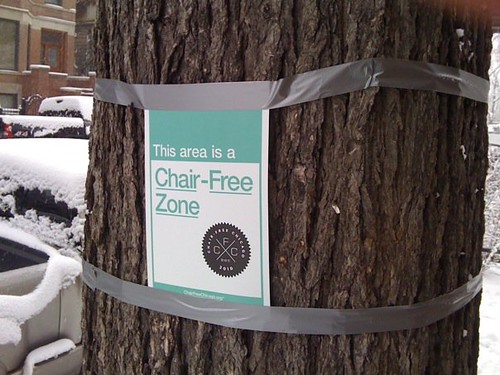
I live in a city, and it’s a winter city.  The area I call home has traditionally seen streets lined with milk crates, plastic chairs and random pieces of furniture; it’s how people in my neighborhood save their parking spots.

Some of you have no doubt seen something similar.  And honestly, it makes a bit of sense (especially after I spent 2 hours shoveling out my car, then shoveling the space it was in).  Driving home last night, however, I decided I absolutely hate this habit.

Although it takes a lot of work (like, heart attack inducing amounts) to get your space cleared, it is awful to put stuff in the street to protect what you’ve done, rather than trusting others to also do their piece to clear the street.  When we were hit by over 13 inches of snow, the next morning everyone on my street was out, shoveling, snow blowing, talking and waving.  It was the first time I’ve felt like I live in a community, rather than in a block of houses.  I personally shoveled our house and my car, plus my neighbors’ sidewalk (they are old and decrepit).

When I drove home from work around 5:30, there was no space.

My entire street was filled with chairs and milk crates (not cars).

When you live in a city, like it or not, you’re part of a larger community.  Your actions impact others on your block, in your neighborhood.  Just as we are responsible for shoveling our sidewalks (so people don’t slip and die when trying to talk), cutting our grass (so the block doesn’t look bad) and boarding up windows that are broken (to prevent all sorts of nastiness), we should also accept shoveling spaces as a part of community responsibility.

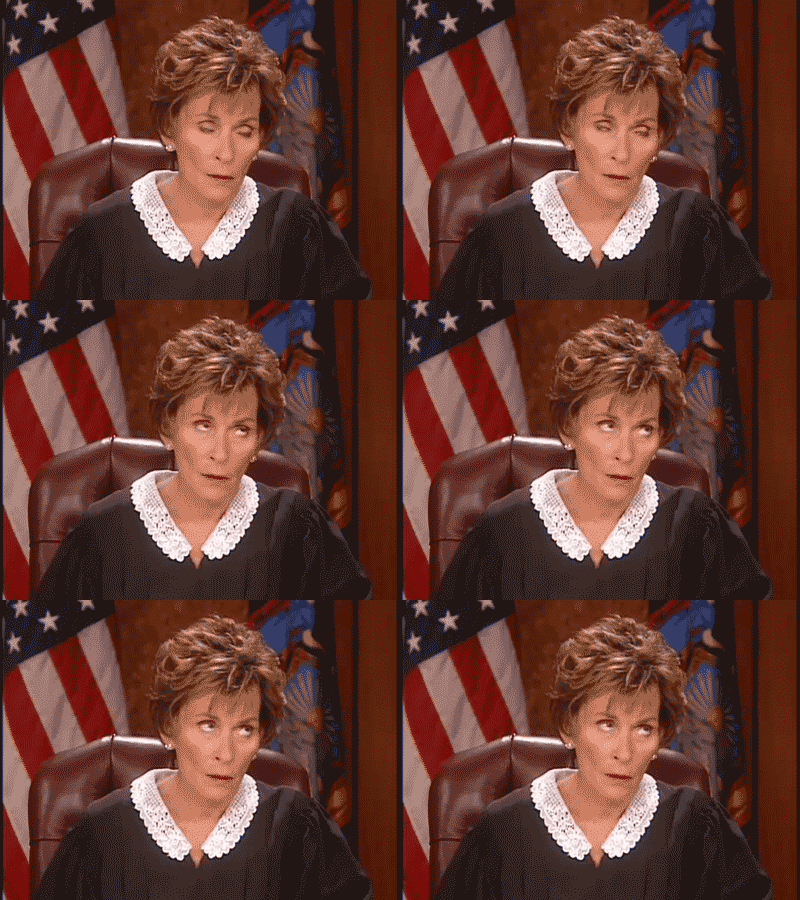
nope.

I live on a public street with no driveways, where the alleys and garages are inaccessible after a huge snowfall.  It’s not fair to expect parts of a public street to be reserved only for you, no matter how much shoveling you’ve done.  That’s part of the street that’s not accessible all day – even if you’re at work 9-5.  That’s a part of the street unavailable to our postal workers, or an ambulance.  And it’s a dick move.  Really.  (even though people will argue forever that it’s not).

A few cities are passing ordinances and trying to take a stand against this kind of space saving, but we’ll see how well it works.  For the time being, maybe we need to try and remember that we don’t just shovel out our cars and spaces for us – we do it for everyone who uses the street.  Let’s honor this social contract and through our behavior, teach others to do the same.

As so often happens, I was reading an article in the Metro Times, one which advocated for marijuana dispensaries as legal business within the city of Detroit (and Michigan, in general).  Read it here.

Right now in Detroit there are about 180 dispensaries all over the city; Weedmaps has a service allowing users to locate their nearest dispensary, much like a yellow pages for pot.

You may have already guessed I’m an advocate of legalization; honestly, I’d like to see all drugs at least decriminalized, so we can stop filling up our jails with simple users and non-violent drug crimes.  But the dispensary issue is a bit murkier.

Since the end of prohibition in the 1920s, liquor has been widely available for purchase and subject to government regulation.  Like it or hate it, we have an age where use is legal and we have standards for how to sell it (by looking at an ID, bartenders aren’t supposed to over-serve, we have a legal limit for driving etc).  Even though we know parents buy for kids, teenagers sometimes get a ‘fake’, we still (generally) see the rules being followed.

There aren’t real, concrete rules for marijuana dispensaries or who they can sell to, where they can be located…it’s a bit of a mess.

I love the idea of stores because it’s a safety issue; it’s safer to go into a business than to talk to some dude on the street (or, more likely, to trust that the guy your friend uses has safe, quality product and isn’t working for the police).  I love the idea because it moves us one step closer to that state of legalization and of decreasing stigma of use.  It just worries me, because we’ve seen alcohol be used as a means of oppression in poor communities, and I’d hate to see this go the same way.

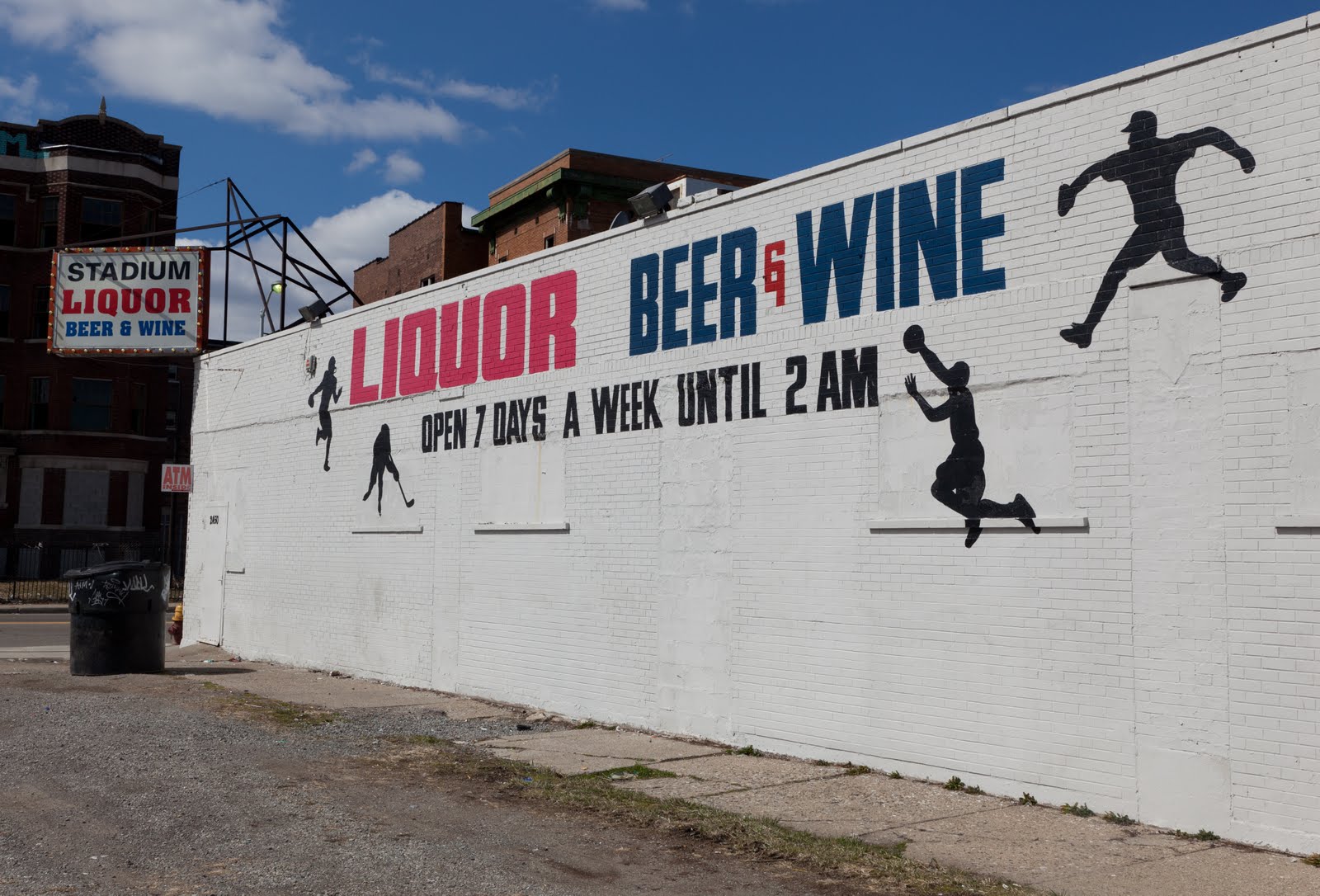
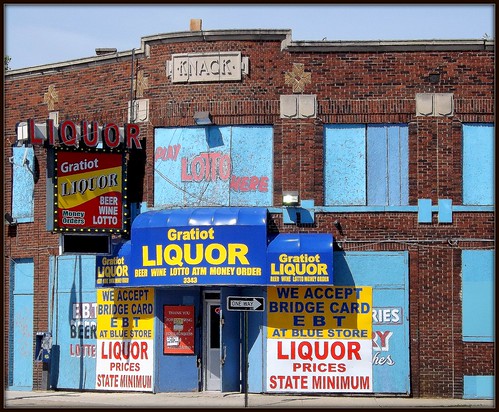
Poor areas are wayyyyyy more likely to have an abundance of liquor stores.  WayMoreLikely.

Easy availability of alcohol is associated with increased rates of neighborhood violence.  Alcohol advertising is targeted toward people and communities of color (l think we all remember the Colt 45 ad with Billy Dee Williams, now ironically appropriated by rich white hipsters).  Liquor stores take up space that could otherwise be used by local businesses, schools, religious organizations, etc (or even grocery stores to increase food availability).  Liquor ensures poor communities stay poor, and contributes to lack of safety and economic decline.  When liquor stores are less prevalent, youth homicide drops and median income rises.

Don’t get me wrong – this isn’t a plea to make booze (or weed) illegal again, but we can’t deny the impact adding liquor and weed to the environment has on our vulnerable communities (including the perpetuation of racism against and within communities of color).

So we’re seeing enormous numbers of weed stores popping up all over Detroit.  When I look at the map of dispensaries, I’m not seeing them ONLY in poor areas, but perhaps concentrated in areas of vulnerability.  District 1 is home to 13 stores; District 1 has some of the lowest employment rates in the city.

We don’t need rules and regulations to protect us from ourselves – we need them to ensure corporations and single-minded businesses aren’t allowed to create negative environments just because they can, because we haven’t said no.

Weed might be safer than other drugs, but if we don’t pay attention, it will be added to the oppressor’s toolbox.

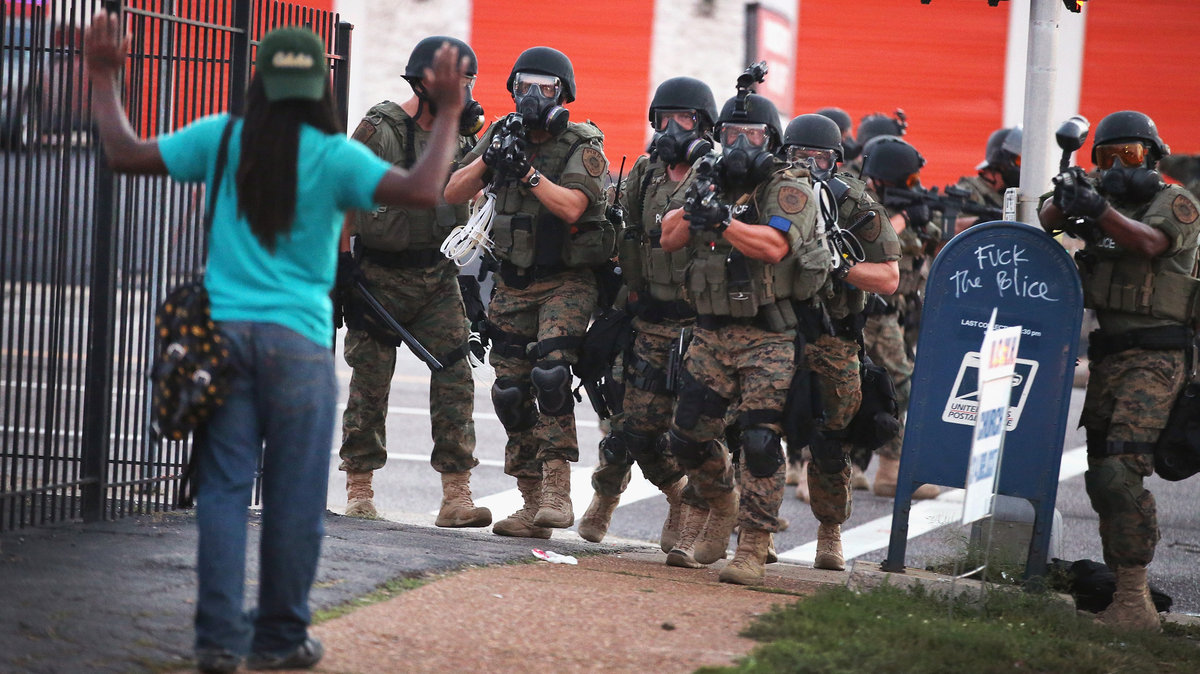
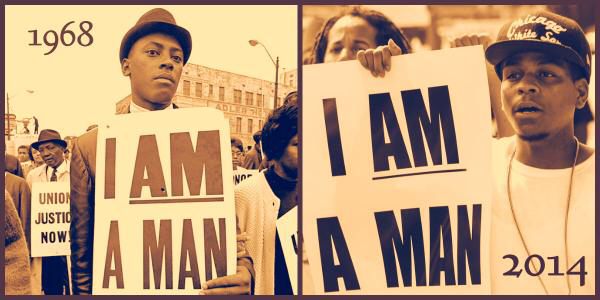
Ever since Ferguson, I’ve been hopeful that we’re living in a historical turning point.  I keep thinking and hoping the greater culture is finally going to open up a bit, to acknowledge systemic oppression.  Hell, just to acknowledge basic inequality here in the states.  And maybe to look at the function police serve.

Probably a lot of this hope comes from my online reading and research.  Sometimes, I think we lose sight of how insular online communities, forums and opinions can be; it’s very difficult to judge how well a viewpoint translates to the wider world if we’re constantly surrounded by agreement and similarities.  Even when we think our views are the best and clear and should be obvious to anyone with a brain.

My parents and I have been growing steadily different, like two paths branching out from a fork in the woods.  Sometimes it feels like miles of darkness between us, with no clear path to connect.  Neither of us is bad or stupid, and we still function and love each other (which is often a rarity in families, I’m very lucky).  And because we still love each other, it’s sometimes difficult to even attempt the long slog through the woods towards each other – what if we end up with only hate and vitriol that will forever stain our relationship?  A film of anger over our love for each other?

Today I figured out what’s been bothering me, niggling away in the back of my brain, about Darren Wilson and Michael Brown.

Someone close to me characterized Brown as a “thug.”  This is a person whose father was a (white) Detroit police officer in the 1960s, and left a few years after the rage and destruction of the 1968 riots.  He was by all accounts a good man and a good cop, although I doubt we ever truly know a person after the fact, or know everything about them from one role they play in their life.  Lineage informs our development and views, and it makes sense to me to support police if your experience was with a family member on the force who was good and decent.  Even if we don’t agree, we can understand why this person might not want to look at bad police behavior.

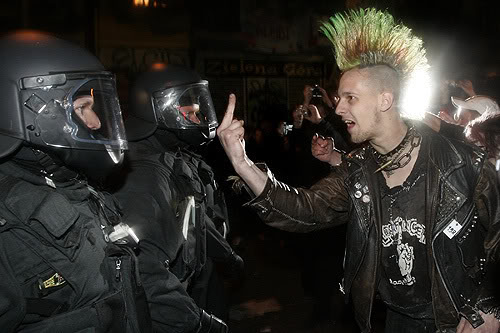
Now, my favorite documentary is American Hardcore, the movie about the hardcore punk scene in the late 1970s and 1980s; love it or hate it, it’s a nice little slice of the music and attitudes from that period.  In it, there’s a moving scene of Mike Watt and Henry Rollins (separately) talking about police beating up kids at shows.  I can’t describe it, it must be seen.  (watch it here, at 1:19:23, I could not find a youtube of the right part).

Rollins talking is what reminded me of Ferguson.  He looks at the camera incredulously, saying “The police always started it.  It’s not like we go up to uniformed, armed men and say ‘come on’!”

If nothing else, talk with your parents about this.  In my experience of white, middle class, suburban people, which is admittedly not a random sample nor representative of all families, older folks identify with the police.  They understand the fear, the need for protection, the concern that our world is falling apart with violence at every corner and beneath the skin of every person, and feel the police are doing well, acting ethically.

Your job is to bring up the other side.

Without empathy we cannot move forward.  If our job as white people to get our own people; if they cannot hear the words of people of color, they should be able to hear us.  I don’t know if they’ve never known fear of authority (because it looks like them) or if they’ve simply forgotten what it’s like to move in a hostile world.  It really doesn’t matter; people can remember, they can see. they can learn.

If we can get them to feel just a fraction of the fear our communities of color experience, we’ll have gotten somewhere.

A kid doesn’t charge a uniformed, armed officer in a vehicle.

And working to change (or better yet, abolish) a system must be understood as a movement because it’s not working.  It is not working to have 70% of our population constantly living in fear.  It is not working to incarcerate 2/3 of young men of color.  It is not working to act surprised when police act how they are taught to act, and acknowledging this does not condemn the good people who are attempting to function in a broken system.  It’s not working to blame songs like “Fuck Da Police” when police make you feel scared rather than safe.

An act by one person of is enough to condemn the group, then why isn’t an act by one cop enough to condemn the system?

Not all cops, sure.  But then you HAVE to understand – not all [black, brown, young, poor, angry, female] people.

(image via)

One of the blogs I read on the regular is Dances With Fat; I like the material and it’s turned me on to lots of HAES resources and ideas.  It was interesting reading her post “There Are Two Kinds of Fat People” today, because it reminded me of the baloney Bill Cosby used to put in his stand up act (when he was still somewhat respected because we hadn’t found out about his bad sexual assault habit) talking about black men.

There are a ton of black comedians (and of course, comedians of other races, but we’ll ignore them in favor of people who have actual lived experience and have a voice as people of color) who talk about different kinds of black people.  Chris Rock had the most famous bit (I think), talking about how he hates n*****rs.  You can watch it here.

His bit is clearly part of respectability politics, the idea that if you act good enough, achieve high enough, try hard enough, that you will then be treated as a human being, worthy of respect and consideration, by the dominant class.  Generally, this involves simply adopting the ideas, mannerisms and goals of the dominant class, without regard to your personal autonomy or being able to choose your appearance, dress and presentation.

An excerpt from Buzzfeed, of all places, sums it up:

Society has spent decades, if not centuries, just waiting for black people to “get it,” and one by one these brave messengers will come, sharing with us the gospel of how it’s all our fault…but hey, we can fix it.

But in order to become “respectable,” the targeted group is always encouraged to change. And the changes always, always require the targeted group to become more like the dominant group. If black people act more like white people, or women act more like men, or gays and lesbians act more like straight people, they’ll all see the same outcomes. But the underlying goal of this is to stop being “different.” Act “normally,” and you’ll be treated normally, but if you step outside those boundaries, it is your fault and your fault only.

(full article here)

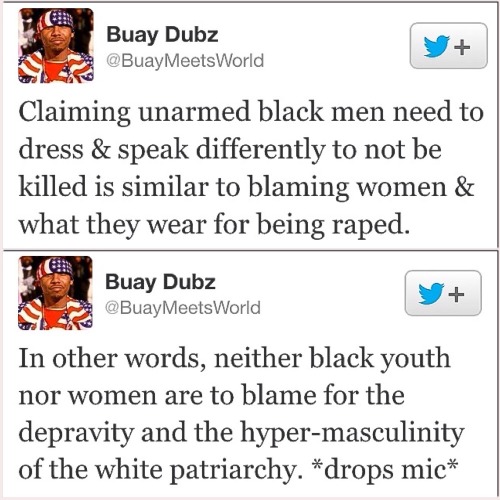
As you might have guessed, I don’t buy into this idea.  I may have personal preferences for how I enjoy people to behave, but those are my preferences.  People deserved to be treated like people, no matter how they choose to dress or present themselves.

I stand on the side that doesn’t support black youth having to constantly live in fear that if they did one single thing wrong, including their clothing, they could be killed legally. Oh wait, it’s still kind of like that.

The idea of a “good fatty” is the same kind of respectability politics.  I figured this out finally – the reason I was so defensive when I’d go to the gym for only 30 minutes rather than an hour, or the reason I still can’t look a clerk in the eye when I buy an ice cream cone, is because I feel like this is proof I’m a “bad fatty.”  I was being judged, I deserve what I get, I am disgusting, and if only I would deign to change my lifestyle, life would be easier and better for me.  Any bias or judgment or discrimination is my own damn fault for not caring enough to change.

Someone’s appearance is not a judgment of their worth.  Wasn’t it Martin Luther King Jr. who wanted his daughters to be judged on the content of their character, rather than the color of their skin?  Yet here we are, adding prejudice to our already bright array of ill-formed ideas about what a good, normal person is like rather than opening our minds and hearts to the beautiful diversity so essential to the human race.

People deserve to be treated like people.  The end.

(all images link to original sources)