altruism-830x460

It wasn’t until the later part of my graduate school career that we started to talk seriously about altruism, it’s effects in society, and how little we actually understand the impulse to do good.

Most psychologists are of the mind that no act is purely altruistic.  When we act altruistically, there is generally a hidden benefit to the giver; altruism acts as a strengthener of the social network, the common thread between us in society, ensuring that we get what we give – what goes around comes around.  Some people act for religion; some, to offset (or continue to do) harm.  Our biology can encourage us to perpetuate our genes, even at our own expense.

Read the rest of this entry »

#TBT Song’O’The Week

Posted: November 19, 2015 in #TBT Song'O'The Week

In November, the best month for Scorpios, and on the week of my mother’s birthday, today’s TBT song is a real throwback.  This is the tune that prompted dancing around in the basement, and still, to this day, makes me sing along at the top of my lungs every time I hear it.

Happy Birthday Mom!

shame

I’ve talked at length about shame and its impact on behavioral change; namely, that when we’re feeling shame, we’re about as far from changing our own behavior as we can be.  When we’re feeling shame, the self is so threatened our only reaction is defensive, and defense is not a great place to begin looking at our own behavior and where we need to improve.

Lately, it’s getting more and more important for people in positions of privilege to acknowledge their own shortcomings.*  I read this as an enormously positive indicator that traditionally oppressed groups are beginning to make their voices heard and push for social change.  However, that means (of course) that people who aren’t so used to actively confronting contentious issues are being asked to react in thoughtful, nuanced ways, and are woefully unprepared to do so.

*We need to understand “privilege” as not necessarily individual, but rather being part of a traditionally valued part of our social system.  You as an individual might not be doing better than any other individual, but as a part of a general group, you have historically benefitted from some aspect of your identity.

Read the rest of this entry »

#TBT Song’O’The Week

Posted: November 12, 2015 in Uncategorized

Today’s excellent song is one of my favorites for teaching aerobics.  Full steam ahead, sultry and fun, without a single pop star present.  The Cramps, “Ultra Twist”

My nightmares have been haunted, of late, with the technology called CRISPR.  I’m going to put its basic premise into far too simple terms and analogies, in the interests of time.  CRISPR is gene sequencing technology, allowing scientists to splice differing genes into an organism’s actual genetic structure.  The scary thing is that these changes can be passed along to all future generations, using what’s called a “gene drive.”

Yesterday scientist Kevin Esvelt spoke with On Point about gene editing, and was talking about how Lyme disease could potentially be eradicated within 10 years; it’s passed from mice to ticks, so if you remove Lyme disease from mice, you remove it from humans.  The scientist discussed how since this would affect the shared environment, whether or not science proceeds is up to all those who would be affected by the shared environment (that means all of us, kids!).  He asked if we could be affecting other things in the environment.

What stuck in my mind was him saying he didn’t think we would affect the entire environment.

EVERYTHING we do has consequences.  We have brought invasive species into pristine environments.  We are heating the oceans enough to eradicate fish and bacteria existing for centuries.  We have introduced other species to try and fix our first mistakes, leading to more and more issues and complications in the natural environment.

We have messed with nature, and it shows.

And now we’re discussing changing the actual genes of an entire species.  We are playing way outside of our competence, here.  Who can know the long-term effects we could have on the environment?

Diseases are horrible, yes.  But they exist for a reason.  Everything in nature is subject to basic population controls – if a species becomes too populous, nature will introduce a disease, a plague, a predator, and balance will be restored.  Whenever we humans have messed with this basic premise, problems have resulted.  Look at the proliferation of zebra mussels in the Great Lakes – we thought this was going to be the end of the world as we knew it, because carp and other freshwater fish would no longer have seaweed and silt to hide in; instead, we’re seeing other fish gain prominence and the zebra mussels acting as a food source.  Nature is doing its best to fix our screwups, but instead of learning, we continue to mess around.

Humans are subject to the same natural laws as all other organisms.  We should not be messing around with species’ genetics in order to make our lives easier.

At least this particular scientist is bothering to ask if we should do something, rather than simply if we could.

#TBT Song’O’The Week

Posted: November 5, 2015 in Uncategorized

Of course, we’ve gotta get a bit into the industrial side; I was never into any of the goth rock, radio friendly scary men, but I’ve recently discovered Marilyn Manson (courtesy of my only remaining high school friend).  In honor of her recent transition to Los Angeles, today’s tune is “Personal Jesus” by Marilyn Manson.

Perfect for the fall.  Have a great weekend!

screw-clamp-790474_1920

It’s been fifty four years since Stanley Milgram made history with his experiment on obedience to authority.  His results are in every psychology course, political science theory, and argument about war.  I, myself, have taught the experiment’s hypothesis and results for years.

It turns out, there is an essential piece most of us are missing when we talk about this study.

In 1961, Stanley Milgram chose hundreds people to ostensibly be participants in an experiment on learning techniques.  In reality, he was searching for information on obedience.  After World War II, social psychologists were hellbent on figuring out how ordinary citizens participated in the mass killings of Jews; Milgram believed part of this phenomenon was as a result of being given orders by an authority figure, allowing people to rationalize their behavior and continue to kill their fellow citizens.  Milgram asked ‘teachers’ to administer shocks to ‘students’ (who were confederates not being shocked), with scientists in the room prodding them to continue if they wavered.

In Milgram’s most famous instance of this study, almost 65% of people continued shocking a subject past lethal levels, past screams of pain, past no response, as a scientist stood at their shoulder and reminded them the experiment required they continue.

Scary, right?

It totally is, but not for the reason you think.*

I’ve always understood this study to be an exercise in taking orders.  Milgram had four scripted responses for his ‘scientists’ to use to prod subjects into continuing to shock learners:

  1. Please continue.
  2. The experiment requires you continue.
  3. It is absolutely essential you continue.
  4. You have no choice but to continue; you must go on.

The first three are suggestions; strong prods, very persuasive, but not an order, not “you have to do this.”  When scientists used the fourth prod, people stopped administering shocks.

Turns out, we’re not really great at following orders.  People who heard the fourth prod started disobeying, stating they absolutely do have a choice, and it’s not to keep doing this, dammit!

Those of you knowledgeable with how psychology works, or close to a difficult teenager, will not be surprised by this finding.  We are not fond of feeling we’re not in charge of our own lives; the instinct can be to do the opposite of whatever you’re told.  Therefore, giving orders becomes more effective when they are strong suggestions; processes like denial of responsibility, confirmation bias, and rationalization can all start whirring away to make people believe following orders is their own choice.

If this sounds familiar, dear reader, it’s because it’s the same principle underlying one of the most effective psychological treatments ever practiced – motivational interviewing, which was codified in 1991, is based on the idea that confrontation is not helpful in changing behavior.  On the contrary – when people are confronted and they’re not ready to change, they tend to dig in their heels and negative behaviors become more entrenched.

The takeaway is not that we’re mindless automatons, waiting for our masters to tell us what to do; the truth is far more insidious.  We are suggestible.  If we can make ourselves believe we’re doing bad things for a good reason, or a reason that’s consistent with our own self-concept,  or if we can push the responsibility for our actions on someone or something outside of ourselves, we can be persuaded to continue.

And that should terrify every contrarian.

*(Radiolab just did a segment on this, which can be heard here)

#TBT Song’O’The Week

Posted: October 29, 2015 in Uncategorized

Today’s tune is in honor of Halloween, one of my favorite holidays of all time.  This song is near and dear to my heart; it’s perfect for a burlesque routine, a dark scary house, or a horror movie.  Nick Cave’s “Red Right Hand.”  CLASSIC!

Dance around, light your candles, and rock to the sweet tunes.  HAPPY HALLOWEEN

Punk vs. HipHop: Music for F*ckups

Posted: October 27, 2015 in punk
Tags: , ,

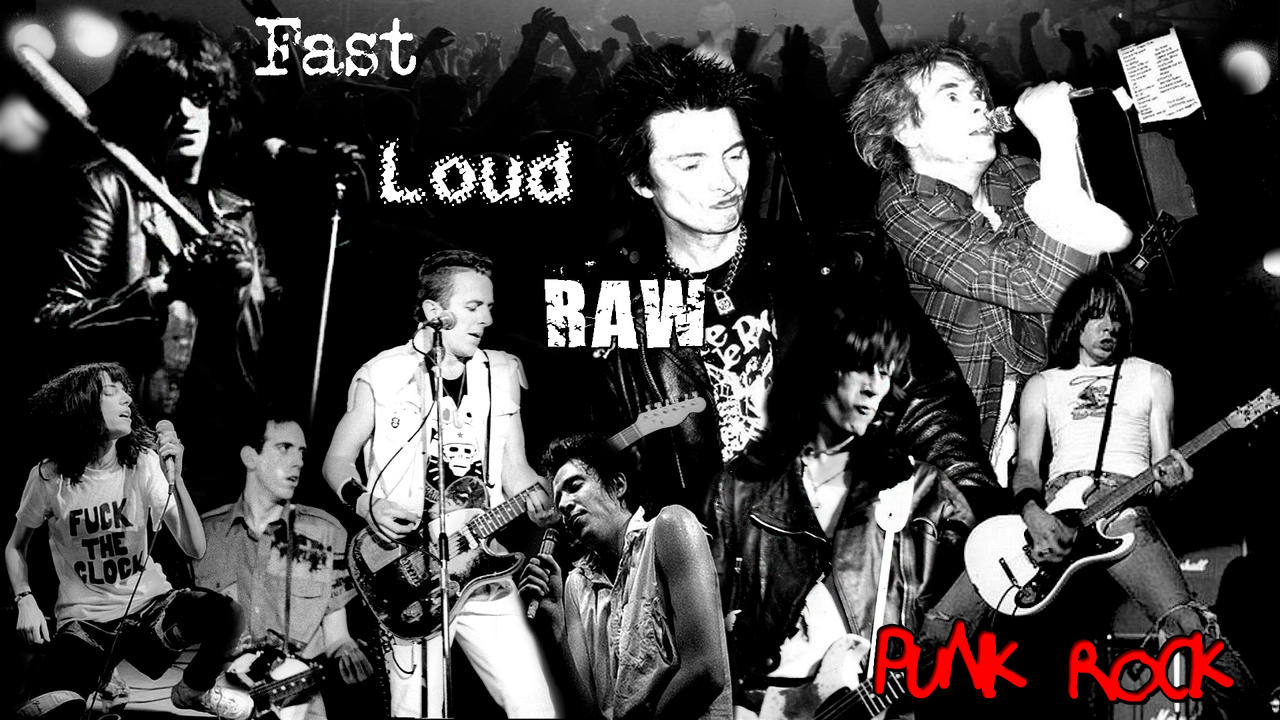
It occurred to me this morning, as two songs simultaneously rattled around my head, it occurred to me how differently punk and hip hop treat pre-achievement status.  You know – making mistakes, being unsuccessful.  It seems to me most hip-hop (and of course, I’m generalizing here – my knowledge of hip-hop is mostly surface, so I’m going on what I’ve heard on the radio and from friends) is built to glorify the time after achievement.  For example:

This contrasts with many punk songs, which are focused on the time before success – the fighting, the struggle, the mistakes.  For example:

(and I recommend The Overton Window by Frank White)

Punk rock is the fight song; hip-hop is the afterglow.

I think it might be easier to find a punk song speaking to how you feel at this moment rather than how you wish you were feeling.  As I recall, this is the reason so many people freaked out about Linkin Park after Columbine – a rock band was unapologetically screaming all the angst teenagers usually cover up.

When I listen to hip-hop, I sometimes get depressed because I haven’t yet “made it.”  I’m not at the top yet.  I don’t feel like I can look down at haters, or feel like I can sit back.  How can a teenager relate to a millionaire rapping about his gold chains, or Nikki Minaj shitting on her haters?

Punk speaks to my anger, the fact that every day is still a struggle.  I wonder if it’s changed as I’ve gotten older; do younger people need that affirmation, that understanding that they can (eventually) make it? Is it because hip-hop never minded going for the gold, where punks are embarrassed by success?  Or does “making it” become the end all be all, forgetting that our struggles, mistakes and trials are also important and make us who we are, even as we’re struggling?

We’ll end with 7Seconds, who said it best.  We walk together – why can’t we rock together.

#TBT Song’O’The Week

Posted: October 23, 2015 in #TBT Song'O'The Week

This week’s tune is a classic from Stick To Your Guns, one of my favorite bands of all time.

Listen to that and tell me your heart’s not racing!  Let’s go mosh!