quick hit: cravings

Posted: April 1, 2014 in Uncategorized

seriously, fuck this.

further proof that diets make us all insane, first talked about (or at least, empirically supported) in the minnesota starvation study.  and here it was on post secret.

made my heart break, for this person, my old self, and everyone who will ever suffer like this.

fucking diets, man.  we have to start trusting our bodies!

remember them?!

i started exercising when i was in high school, running in the summertime.  it coincided with my introduction to hardcore, most notably the [kick ass] band Walls of Jericho.

i would run and dream about someday meeting the bands i would listen to, explaining how their music had inspired me to exercise, and of course, lose 60 pounds or so.

ah, youth.

i was thinking about this today; i was running on a beach, which is not my normal place nor my favorite pastime.  i hate sand and hate the ocean, but that’s not pertinent for our purposes today.  read more and be inspired!

Read the rest of this entry »

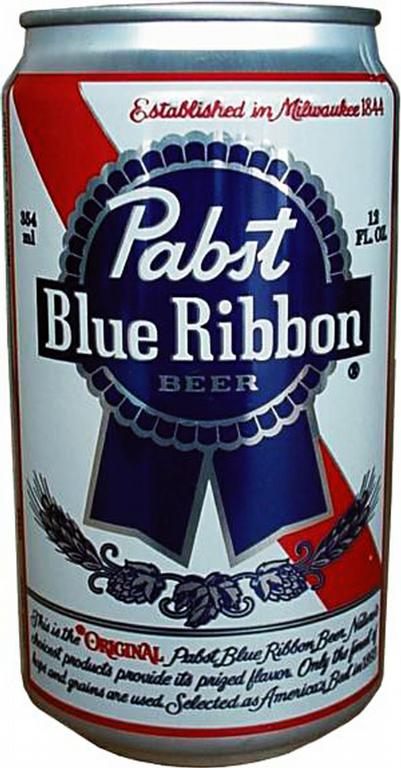
pizza and pbr

Posted: March 8, 2014 in punk
Tags: , ,

So last week we discussed a bit about how punk tends to objectify and glorify women who (generally) fit into our cultural standard of beauty (white, thin, young).  This is obviously a broad generalization and not true in all cases, but the vast majority.  (side note: if someone can tell me statistically that this is incorrect I would honestly love you forever).  I want punk to be different.  But it’s really not.

fat mike…really not that fat

When I was in college we’d have small shows and parties in basements of the cool scene kids in my town.  It was a lot like high school with a different coolness hierarchy.  The coolest kids were the ones that didn’t like their minimum wage jobs (or didn’t have one), dressed in black clothes with patches all over them, painted their own leather jackets, and seemed to live on PBR, weed and pizza.

mmmmmmmm

I had the most trouble with the last part of this (although really, if I painted my own jacket it’d look like a child’s painting during a spasm).  Eating nothing but carbohydrates and drinking 15 beers a night is really not good for anyone, but is only visible on those of us with metabolisms more closely resembling a snail moving on hot asphalt.  Even though I knew this, instinctively (and because like, come on, at this point I was a professional dieter), I still couldn’t get why some people stayed thin.

except for this guy

It’s a lot of the same shit.  Women are supposed to be thin while still doing crazily unhealthy (and calorieific) things (and not showing effort, of course, it’s supposed to be natural).  PBR has as many calories per can as two apples, or a serving of almonds, or a greek yogurt.  To drink 15 PBRs is as many calories as a day’s worth of food, and that’s without any food.  Which is really not the best idea for your body, although it leads to a short and sweet drunken time.

Women have an even harder time wit ze boozes.  We metabolize food differently (immortalized in those ever classy SlimQuick ads) and of course this also translates into how many Jamo shots are going to lead to antics.  For us ladies only, of course; we all know real men can hold their booze!  (hahahaha just kidding, but we’ll maybe talk about that later)  The only way to stay thin would be to only drink.  And not eat.  Or to have a kick ass metabolism (which  90% is really not up   to you, it’s your dang parents!  Thanks mom!).  Or to throw up everything you put in your body.

More than anything, it’s the hypocrisy that is bothersome.  Don’t say you’re subculture or anti-culture, then fucking put the same unrealistic stuff on a pedestal to be achieved.  Fuck eating disorders, fuck ideals, fuck all the people who celebrate alternative ideals of beauty, which look a great deal like the old ones (I’m looking at you, Suicide Girls!).  This aggression will not stand, man.

ghetto…

Posted: March 3, 2014 in Uncategorized
Tags: ,

Punk rock vs. R&B

No, it’s actually not going to be a big debate.

together at last?

As I’ve mentioned before, I work mostly with people of color, colleagues and clients.  Being in this environment has exposed me to a great deal of music, especially popular music, that I had previously been able to avoid.  This exposure has led to a lot of thinking, and the second installment in the punk rock portion of this blog.

While driving to a basketball game, a song came on the radio called “Ghetto” by August Alsina.  Listening to it, I was struck by the enormous emphasis on the female body (a.k.a. objectification) and the confusion about money.  Is it desirable to have money, but date someone poor?  Is this because it puts the poor partner in your debt, afraid to leave, without resources to escape?  Sounds an awful lot like definitions of abuse.

awwww, i have to date people and make them feel shitty so i can feel powerful

This morning I was trying to think of some well known punk songs that have some of the same confusion, the same issues.  Punk as an art form is inherently limited, as artists and fans reject monetary success as “selling out” (see: Rise Against, Against Me!) vs (Leftover Crack,    Against All Authority.  Hell, even Frank Turner (“we can never sell out, because we never bought in”)

We are so confused.  We don’t want to work our shitty 9-5 jobs for the man but we can’t live without money, man.  Real talk.

(Side note: I love this website www.angryyoungandpoor.com  where things are too expensive for actual poor kids to buy.  Awesome).

We expect people to learn a certain way in punk..even though we say we don’t.  I remember lots of hype about Beth Ditto (who sang for Gossip which was a fairly mediocre indie band) being fat, going against the mainstream.  If we’re going against all that crap, where are the fatties?  Even most of the Riot Grrrrrl bands were young, white and thin, in makeup.

punk fucking rock. but thin. white. pretty. makeup.

Bodies in punk rock (as in most music forms) are primarily male bodies.  Do a google search for “punk.”  Here, I’ll even do it for you.    Some ladies, not traditionally attractive, right?  Mostly white, skinny, young.  Hair funny colors.  For some reason Miley Cyrus?  Quick, name a punk band with all girls.  Not even the Distillers!  Not even Star Fucking Hipsters!  Not the Horrorpops!  And notice how these women look.  Young, white, thin, makeup.

R&B and Punk objectify different people, different looks, different ideals.  But we’re still objectifying.

More to come next week!

I was going to write about this Biggest Loser thing (seriously, fuck the Biggest Loser), but we’ve had enough of that I think.

super psyched

Finally, let’s get to the punk rock part of my title line (none too soon,amirite?)!


For some unknown reason this morning, I woke up with the Minor Threat classic “Guilty of Being White” stuck in my head.

In the documentary American Hardcore, Ian Mackaye talks about how he wrote the song as an anti-racist song after attending high school in Washington DC, as it was a black majority school and he felt he was unfairly judged by the color of his skin.  In keeping with person focused ideas, I believe he really did feel victimized.  However, as I was singing the song in the shower (don’t judge) I realized I have a huuuuuge problem with the lyrics to that song.

this guy’s totally into it.

I work in Detroit with a majority black staff and majority black clientele.  I went to school for my master’s in Chicago, where we talked a great deal about systemic racism.  I worked in community mental health in Chicago too, and the amount of poverty south of 14th street is sick.  For those of you too lazy to click the link (I’M LOOKING AT YOU!) systemic racism is less like screaming the n-word at a black person and more like calling some neighborhoods “bad” or “ghetto” and being scared to go there without considering those people that have to (usually) stay there and are probably just as scared.  Because they’re brown and that’s where brown people belong right?

Anyway.

see? everyone’s excited!

So my problem with “Guilty” is it’s total lack of awareness of two things: the systemic racism Minor Threat (a group of young white males) acknowledges, and the lack of understanding how they benefit from these systems that are still in place.


Here are the full song lyrics:

I’m sorry
For something I didn’t do
Lynched somebody
But I don’t know who
You blame me for slavery
A hundred years before I was born

GUILTY OF BEING WHITE

I’m a convict
(guilty)Of a racist crime
(guilty)I’ve only served
(guilty)19 years of my time

GUILTY OF BEING WHITE

(via)

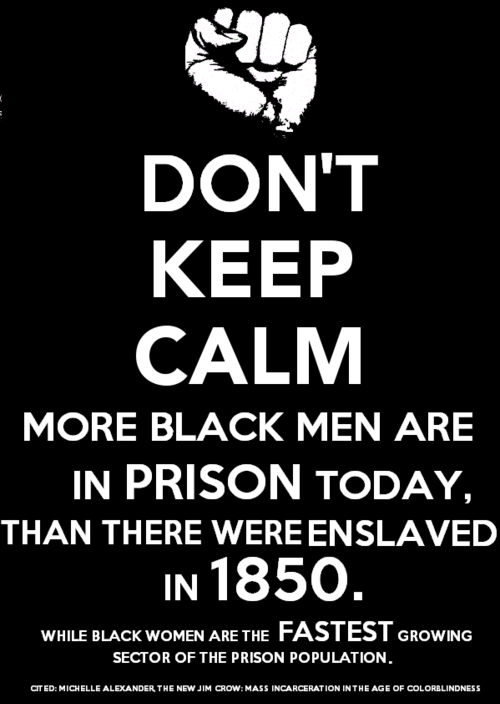
See what I mean?  I doubt his classmates blamed him for slavery (but who knows); it seems more likely to me they resented his automatic sense of entitlement (“I shouldn’t be bullied”), his increased access to resources and advancement, the fact he was less likely to go to jail  or prison than his black male counterparts ((.056%) vs (.105%)…the list goes on.  Instead of recognizing his benefits from this system and owning them, he blames his “oppressors” who have found him guilty.

This isn’t an article about how Ian MacKaye is a bad person.  It’s about how invisible our privileges are.

So therapy for eating disorders, and really therapy in general, is all about being gentle and kind to yourself. Often, our mental health hinges on ingrained sense of worthlessness, habits of kicking ourselves when we’re down, and long held patterns of shame.

good?

To move toward recovery, one needs to start putting old behaviors behind, including negative self-talk, self-harming behavior (which, coincidentally, includes binge eating and exercising as a form of punishment ) and basing worth as a person on achievements and how hard one is working to change what is “bad.”
I’ve also been pretty heavily looking at the Intuitive Eating program, which focuses on the idea of trusting your body to know what it wants to eat and how much it needs to eat. One of the examples that’s stuck with me is that instead of saying things like “I really ate like a pig today” or “man, I need to do better tomorrow,” you’d focus on thoughts like “I had many opportunities to honor my hunger today” or “my body really needed rest today.”
Part of recovery is this reframing. But I realized this morning I keep thinking of this kind of thinking and attitude is a sign of weakness.
Now, pushing ourselves is a time tested value of our culture; for many with ED, pushing ourselves looks like a constant barrage of “never good enough.” These thoughts are fueled by fear – fear that if, for whatever reason, we calmed down our self-flagellation, we would be down the path of no return, eating until we burst and never exercising again. This kind of thinking is ridiculously hard to change. Imagine being miserable with yourself all the time, but scared to change because you could worsen exponentially.
So how do we move forward? How to rebuild trust in a body we hate? How to rekindle love for the body we’re in? How to truly believe we can truly stop punishing ourselves, that what we are really is enough? Unfortunately, like everything else, the best teacher is experience, and experience only comes after we take that leap of faith.

A few weeks ago I learned not all mother daughter pairs bond in Jazzercise class.  Crazy, right?

woooooo!

My mom has been doing dance aerobics since I was born.  I went to daycare at her class, and when I was an adolescent started attending classes with her.  For those of you who are uninitiated in the practice of aerobics, nee Jazzercise, let me explain.  A class full of women, mostly middle aged, in the suburbs, dancing to pop and country music.  Generally.

As an awkward, chubby, generally angry and unsure 12 year old, you can only imagine what [trying to] grapevine next to my mother  in front of the mothers of my friends was like.  Usually I’d get so uncomfortable I’d stop class, just sit outside until she was done, where I would subsequently be yelled at for being uncomfortable.

omnomnomnom now i only have to run 5 miles!

In high school I discovered running, which acted as an unhealthy behavior for many years (running on 1000 calories a day, anyone?), but also gave me an idea of why people actually liked this exercise business.  To this day, running and weight lifting are two of my favorite things.  I even teach dance aerobics.

Now those who struggle with their weight, or those with negative body image, so basically all the women I’ve ever known, are constantly told to exercise.  It’s a common shaming tactic to tell “overweight” folks that they just aren’t exercising enough.  Calories in, calories out, amirite?! (hint: no). Health at Every Size, the movement promoting healthful behaviors regardless of appearance or body composition, encourages movement.  Just moving your body is healthy.  And it feels good.  HAES keeps saying you should exercise because it feels good.

To those of us who grew up with expectations of weight loss, exercise as a positive experience is really hard to grasp.  Even now, after seven years of enjoying the movement I do, somewhere in my reptilian brain it’s still only for weight loss.  How can you enjoy exercise for the health benefits or the fun of movement when you’ve been raised thinking of exercise as a weight loss tool only?

People with and without eating disorders use exercise as compensation (it’s been termed “exercise bulimia”).  Have you ever run an extra mile to “make up for” something you ate that day?  Ever skipped a meal because you didn’t work out hard enough?


Monday in Jazzercise class, there were about 30 women dancing along to Britney and Kesha and Pitbull.  Most of them were sweating, but also smiling.  Then the instructor announced a 20 week weight loss challenge.  The class was silent until the end.

The wonderful Brené Brown has recently released her newest book, Daring Greatly, which I am eagerly reading cover to cover.  As always, it sparks new motivation in me to continue analysis of all the messages we receive about worthiness.

Recently I’ve discovered part of my mental health involved not feeling worthy, or like a worthwhile person.  I think this is linked to our culture of achievement, the one that tells us we are what we do, the one that pushes us to believe what we do is never enough, the one that expects us to be perfect but not with effort, not with the work it takes to try and reach that (unattainable) level of “right.”

Weight loss is an obvious place we see this model writ large in our culture.  I’ve talked about the Biggest Loser, but it’s not only on reality television.  We hear it day in and day out, in tabloids, at our workplaces, at our gyms, with our families.  Almost without exception, it’s a congratulatory tone, praising willpower, praising the “finally made” decision to be thinner.

When one is faced with cultural values that do not fit with personal values, there are generally three big options.  You can ignore it, and pretend it isn’t there.  You can accept it, and strive to fit your values into the cultural framework.  You can reject it, creating values of your own (punk rock, amirite?  amirite, ladies?!).

The problem with creating your own unique value system is the kernel of positive focus in some of these cultural standards.  Achievement is a worthy goal – it’s at the top of the Maslow hierarchy of needs, it’s an essential part of Erikson’s developmental stages, and I know I personally feel validated and positive when I have concrete accomplishments to look at.  When my worth as a person is in question, because of failure or performing at a mediocre level, that becomes a problem.

If we’re only good for what we achieve, and weight loss is an achievement, no wonder we always feel worthless.  Most people who lose weight gain it back.  Adding healthy habits to a routine does not always add up to weight loss – our bodies are created to survive, and to hang on to fuel if there’s food scarcity.  Adding muscle can add to weight, or at least keep weight the same.

To be healthy and at a “non-ideal” weight is, in itself, vulnerable.  Constantly playing defense with the hours you exercise or the vegetables you eat does not lead to acceptance and peace – the need to prove yourself healthy can be discouraging, and keep that angry furnace alive and well.  Let’s start building up our shame resilience today; we know ourselves.  What other people know will always be incomplete and inaccurate.

not just feeling sorry for yourself

In mental health there is and has been a hot debate about the efficacy of medication to treat mental illness concerns.  Most research and evidence shows the quality of the relationship between therapist and client is the most robust factor predicting change and improvement (studies here).  Medication is rarely enough to cause real and positive change in someone struggling with mental illness; although a portion of the population, about 6% is diagnosed with severe and persistent mental illness (SPMI), the vast majority of those who are prescribed medication to treat mental illness are generally high functioning.  While one in four adults will suffer from mental illness in a given year (which is a huge number – 25%??  Whoa!), we still have an enormous complex about being open and honest in our quest for recovery.

Our cultural ideal is rugged independence – we score higher on that dimension than any other country on earth.  We look up to those who have made it on their own and pulled themselves up by their bootstraps.  This ideal doesn’t hold up well for most of us in the human race; we need social connections to survive , we benefit from collective action (unions, suffrage, state government road maintenance) and most of us need help learning what we do before we can support ourselves – even those who don’t do college were most likely apprentices, learning from someone who knew what they were doing.  Why wouldn’t mental health be the same?

Few mental illnesses require lifelong medication and maintenance; these are the SPMI, including Sczhizophrenia, Bipolar I Disorder and Major Depressive Disorder, recurrent.  These disorders disrupt normal functioning and cause significant distress for those suffering from these illnesses as well as those around them.  Major Depression isn’t just feeling sad and eating some ice cream after work; it’s not being able to move, not caring enough to shower, not having the energy to follow through on suicidal thoughts.

why do we make people ashamed for making an effort?

Beyond these, the most serious disorders, are significant mental illnesses of a potentially shorter duration.  One can be in a depressive episode (lasting about 2 weeks) and need medication to break out of that period, but may not require lifelong medication maintenance.  Obsessive disorders require extensive behavioral and cognitive therapy to replace harmful behavioral/thought patterns with more adaptive versions.  Certain medications can help with correcting these patterns and in rebuilding receptors to prevent a return to maladaptive behavior.

Mental illness is just that – an illness.  With the small exception of religious exemptions, we don’t chastise people for taking medication to cure their strep throat or to manage acid reflux.  It’s time to stop shaming ourselves and others for trying to recover.

So this morning I heard a song in my trampoline exercise class (which is fabulous, as you can imagine) with a chorus of “Only you can make me feel beautiful.”  Me being me, I started thinking about all the times that people tell others how beautiful they are.

imagine!

First and foremost, one of the hallmarks of individuation is being able to know who you are and what you think about yourself, not being moved from who you are by feedback from others.  Gestalt therapy notes one of the issues leading to neurosis is a lack of clear boundaries between “me” and “not me.”  In our internet articles, magazines, books, and movies, it is emphasized  how “sexy” confidence is and how we have to be our own people.  However, this overt message contrasts with the covert messages in the products of popular culture; in this case, music and movies are the most obvious examples.

A lot of responsibility is placed on our partners for our feelings.  We assure people that we can see beyond the outside and we like what we see.  We place our very survival on another person simply being aroundThe number of these messages is tremendous and transcends genres and generations.

oy vey.

Aside from the obvious neediness and lack of our own lives here, there are a few intersections with mental health theory which may not be so stark.  Firstly, women (and men, to a lesser extent) are stuck waiting for their perfect partner.  I can’t be beautiful unless someone’s telling me I am.  I can’t feel beautiful if my partner doesn’t constantly assure me I am.  I can’t feel beautiful and be single.  I can’t feel beautiful when my partner isn’t making me feel I am.

The other aspect has to do with a defensive reaction, something we’ve talked extensively about and that motivational interviewing therapy ‎ is built to reduce.  When we’re told something, that we should do something or we are a certain way, a lot of us have a knee jerk reaction, a defense, that NO WAY reaction.  Even when it’s a “good” thing or “good” behavior we’re being pushed into.  The problem is the push.

so if i do, it’s your fault!

Does telling someone they’re beautiful defeat the purpose?  I know when someone tells me they’re having a bad hair day, and I tell them it looks fine, most of the time they dig in their heels to convince me I’m wrong and they’re right.  In psychology circles, it’s known as the confirmation bias and surprisingly (or not), it confirms we’d rather be right than happy.  We’d rather confirm I’m right about being ugly than be wrong and be beautiful.

The point isn’t to stop telling our partners they are beautiful or to stop accepting complements, but that we first need to change our self-concept and correct the stories we tell ourselves.  Only when we see ourselves as beautiful can we hear and appreciate others telling us the same.